What It Costs to Sell a Home on Alabama Gulf Coast
Selling a home on the Alabama Gulf Coast involves several seller-side cost categories: broker compensation, Alabama's deed recordation tax, deed preparation, loan payoff fees, HOA and condo transfer charges, prorated property taxes, and any negotiated buyer concessions. Every line item is negotiable, and your actual total depends on your price, community type, and contract terms.
What does it really cost to sell a home on the Alabama Gulf Coast?
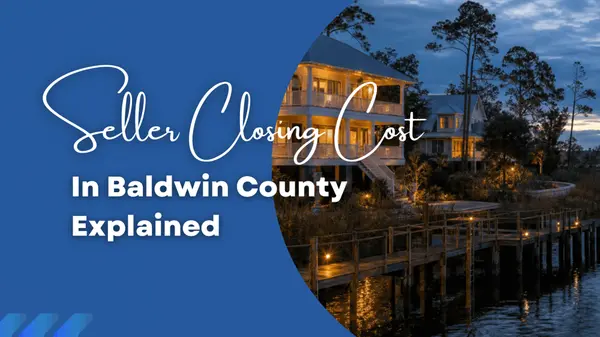
Selling a home in Baldwin County, whether it's a beach condo in Orange Beach, a single-family home in Fairhope, or a vacation rental in Gulf Shores, comes with a seller-side closing statement that surprises a lot of people. Commission is the biggest line item, but it's far from the only one. Alabama's deed recordation tax, deed preparation, your loan payoff, HOA and condo transfer fees, prorated property taxes, and any concessions you negotiate all stack up. The exact total depends on your sale price, your community, and what you agree to in the contract, but knowing the categories before you list puts you in a much stronger position.
Key Takeaways
- Alabama's deed recordation tax is set by statute at $0.50 per $500 (or fraction thereof) of the conveyed property value, per the Alabama Department of Revenue.
- Baldwin County sellers typically carry deed preparation, their loan payoff, HOA or condo transfer fees, prorated property taxes, and any negotiated buyer concessions on their side of the closing statement.
- Broker compensation is fully negotiable and not set by law, there is no standard or customary rate in Alabama or anywhere else.
- Gulf Shores and Orange Beach condo sellers face HOA and association transfer fees that don't exist (or are much smaller) in non-HOA communities like parts of Foley or Fairhope.
- Alabama's closing cost structure differs meaningfully from Florida's, where documentary stamp taxes on deeds add a separate, significant line item that Alabama does not have.
What line items actually show up on a seller's closing statement in Baldwin County?
This is the question I walk every seller through before we even talk about list price. Your net proceeds are only meaningful once you understand what comes off the top.
Broker compensation
Broker fees are the largest seller-side cost category in most transactions. The amount and structure are negotiated in your listing agreement, they are not set by law, by the MLS, or by any industry standard. Per the National Association of Realtors, broker compensation is fully negotiable. Any compensation you choose to offer a buyer's agent is separately negotiable and optional; it is not automatically bundled with your listing fee, and offers of compensation are no longer shared on the MLS. If you want to know what working with Wheeles Realty would cost, that's a conversation we have directly, not something I publish on a blog.
Alabama deed recordation tax
Alabama imposes a deed recordation tax on instruments that convey real property. The statutory rate is $0.50 for each $500 or fraction thereof of the property's conveyed value, per the Alabama Department of Revenue and confirmed in the Alabama Legislature 2025 Tax Guide. This is a statewide rate that applies to every Baldwin County transaction. Who actually pays it, buyer or seller, is negotiable and set by contract. Local custom in coastal Baldwin County varies, and I've seen it allocated both ways depending on the deal.
Deed preparation fee
Someone has to draft the deed that conveys title from you to the buyer. In Baldwin County, this fee is commonly placed on the seller's side because you are the party conveying title, but it is not a statutory requirement and can be negotiated in the contract.
Loan payoff and release fees
If you carry a mortgage, your payoff amount (principal balance plus per-diem interest through the payoff date) comes off your proceeds at closing. Your lender may also charge a statement fee or release fee, and recording the satisfaction of mortgage carries its own recording charge. These appear on the seller's side because they are tied to your debt.
HOA and condo association charges
This is where Gulf Shores and Orange Beach sellers often get surprised. The Alabama Gulf Coast has a high concentration of condo towers and resort-style gated communities, and most of those associations charge fees at sale. You can expect to see some combination of:
- Transfer fees, the association's charge to update ownership records
- Estoppel or status letters, a document confirming your dues balance, any special assessments, and account standing (required by the buyer's lender and title company)
- Account setup fees, some associations charge to set up the buyer's auto-draft
Local practice in Orange Beach and Gulf Shores condo communities often places these on the seller's side, but the contract can allocate them differently. If you're selling a condo, I'll pull the specific association's fee schedule before you list so there are no surprises on the settlement statement. For more on what the condo selling process looks like, see my post on selling a Gulf Shores condo fast.
Prorated property taxes
Alabama residential property taxes are based on assessed value and local millage rates. The Alabama Department of Revenue classifies single-family owner-occupied homes as Class III, assessed at 10% of fair market value for ad valorem purposes. At closing, you pay property taxes prorated through your closing date, the buyer takes responsibility after that. Depending on when you close and whether the annual tax bill has already been paid, this shows up as either a debit or a credit on your settlement statement. Coastal appreciation and reassessments can shift this number year to year, so I always flag the timing when we're reviewing net proceeds.
Prorated HOA dues and assessments
Similar mechanics apply to HOA dues. You pay your share through closing. If you've already paid dues ahead, the buyer may owe you a credit. If a special assessment is in progress, that gets sorted out at closing too, and in resort communities, special assessments for elevator repairs, pool renovations, or seawall work are more common than people expect.
Seller concessions
Any closing-cost credits you agree to give the buyer, or repair allowances negotiated after the inspection, show up as separate line items that reduce your net proceeds. Concessions are a negotiating tool, not a fixed cost, but in a market where buyers have more leverage, they can be meaningful. I cover how to think about price reductions and concessions in my post on price reductions and improvements for Gulf Shores buyers and sellers.
| Seller Cost Category | Who Typically Pays (Baldwin County Custom) | Negotiable? |
|---|---|---|
| Broker compensation (listing fee) | Seller | Yes, set in listing agreement |
| Buyer-agent compensation | Optional, seller's choice | Yes, separately negotiable |
| Alabama deed recordation tax | Varies by contract (buyer or seller) | Yes |
| Deed preparation fee | Commonly seller | Yes |
| Loan payoff and release fees | Seller | No (tied to seller's debt) |
| HOA / condo transfer and estoppel fees | Commonly seller (especially in Gulf Shores / Orange Beach) | Yes |
| Prorated property taxes | Seller pays through closing date | No (proration is standard) |
| Prorated HOA dues and assessments | Seller pays through closing date | No (proration is standard) |
| Seller concessions / buyer credits | Seller (if negotiated) | Yes |
How does Alabama's cost structure compare to Florida's Gulf Coast?
I get this question a lot from sellers who own on both sides of the state line, or who are comparing a sale in Gulf Shores to one in Pensacola Beach or Perdido Key. The categories are similar, but the tax structures are different enough to matter.
Alabama side (Baldwin County)
Alabama has the deed recordation tax described above, plus a mortgage recordation tax on financing instruments at a statutory rate of $0.15 per $100 of indebtedness, per the Alabama Department of Revenue General Summary of State Taxes. The mortgage tax is associated with the buyer's loan, not the seller's costs directly, but it affects the overall closing cost structure and sometimes surfaces in negotiations about who covers what. Alabama does not have a separate documentary stamp tax on deeds the way Florida does, the recordation tax is the deed-transfer mechanism.
Florida side (Pensacola Beach, Perdido Key, Emerald Coast)
Florida imposes documentary stamp taxes on deeds and on notes and mortgages at set per-$100 statutory rates, per the Florida Department of Revenue. These are non-optional transaction taxes and show up as significant line items on Florida closing statements. By common practice in many Florida coastal markets, the doc stamp on the deed lands on the seller's side and the doc stamp on the mortgage on the buyer's side, but like everything else, that allocation is based on custom and contract, not a statutory mandate.
The practical result: a seller moving from Gulf Shores to Pensacola Beach (or vice versa) will see a different-looking closing statement even if the sale price and commission are identical. The overall percentage of proceeds going to closing costs may end up similar, but the line items get there differently.
What the "buyer pays closing costs" default actually means for Baldwin County sellers
One of the most common misconceptions I hear: "I thought the buyer pays closing costs in Alabama, so I don't have much." That's a misreading of how Alabama purchase contracts work.
Many standard Alabama residential purchase agreements default to the buyer covering most closing costs, lender fees, appraisal, buyer's title insurance, and many recording charges. That default reflects a starting point for negotiation, not a guarantee that sellers walk away cost-free. Per the AmeriSave closing costs overview for Alabama, sellers still carry their own customary line items regardless of how the buyer-side defaults are written.
What the default does mean is that in a well-negotiated Baldwin County transaction, sellers are not typically responsible for the buyer's lender fees, title insurance premium, or appraisal. Your costs are the ones tied to conveying your property, deed prep, your loan payoff, your HOA charges, your share of taxes, and whatever you agree to concede.
Every closing statement I review with a seller is different. The categories are consistent; the dollar amounts depend on your specific property, your community's association structure, your payoff balance, and what you negotiated in the contract. That's why I run a personalized net-sheet before we ever set a list price.
Frequently Asked Questions
What closing costs do sellers usually pay in Gulf Shores or Orange Beach?
Sellers in Gulf Shores and Orange Beach typically pay broker compensation (negotiated in the listing agreement), deed preparation, their loan payoff and release fees, HOA or condo association transfer and estoppel fees, prorated property taxes through closing, prorated HOA dues, and any buyer concessions agreed to in the contract. The deed recordation tax is also commonly part of the seller's side, though it can be negotiated either way. Condo sellers in these resort communities often face higher association-related charges than sellers in non-HOA neighborhoods.
Is there a deed tax when I sell in Baldwin County, and who pays it?
Yes, Alabama imposes a deed recordation tax at a statutory rate of $0.50 per $500 (or fraction thereof) of the conveyed property value, per the Alabama Department of Revenue. Who actually pays it is negotiable and set by the purchase contract, local custom in Baldwin County varies, and I've seen it allocated to the buyer, to the seller, or split depending on the deal. It is not automatically a seller cost, but it is a cost that shows up at closing and needs to be accounted for.
How do HOA and condo fees work at closing when I sell a beach condo?
When you sell a condo in Orange Beach or Gulf Shores, the association typically charges a transfer fee to update ownership records and an estoppel or status letter fee to confirm your dues balance and any outstanding assessments. These are commonly placed on the seller's side in local practice, though the contract can allocate them differently. Dues and any assessments are prorated through your closing date. The specific fees vary by association, so I pull the fee schedule for your building before you list, surprises on the settlement statement are avoidable.
Do I pay property taxes for the whole year when I sell in Foley or Fairhope?
No, you pay only your prorated share through the closing date. Alabama property taxes are based on assessed value and local millage rates, and the closing statement credits or debits accordingly depending on whether the annual bill has already been paid. The Alabama Department of Revenue classifies residential owner-occupied property at 10% of fair market value for assessment purposes, and the proration is calculated from that tax bill. The buyer takes responsibility for taxes from the day of closing forward.
What's the difference between Alabama and Florida closing costs for sellers?
Alabama uses a deed recordation tax at a relatively low statutory rate, while Florida imposes documentary stamp taxes on both deeds and mortgage notes at set per-$100 rates, those doc stamps are larger line items and are a standard part of every Florida closing, per the Florida Department of Revenue. In Florida coastal markets, the doc stamp on the deed is commonly (though not legally required to be) placed on the seller's side. Alabama does not have an equivalent deed documentary stamp tax. The overall percentage of proceeds going to closing costs can end up in a similar range in both states, but the tax structures and fee distributions look different on paper.
Can I negotiate for the buyer to cover more closing costs in Baldwin County?
Yes, almost every line item on a Baldwin County closing statement is negotiable. The deed recordation tax, deed preparation fee, and even some HOA transfer fees can be allocated to the buyer in the purchase contract. What's not negotiable is your own loan payoff (that's your debt) and the prorations for taxes and dues (those are calculated by date). A strong offer in a competitive market may not have room for the buyer to absorb extra costs, but in a slower negotiation, shifting certain charges to the buyer's side is a real option. I'll walk you through what's realistic given current market conditions before you counter.
Knowing the categories is a starting point, knowing your actual numbers is what lets you make smart decisions about pricing, timing, and what to accept in an offer. If you're thinking about selling in Gulf Shores, Orange Beach, Fairhope, Foley, or anywhere else on the Alabama Gulf Coast, call me at 251.233.9300 and I'll put together a personalized net-sheet that shows exactly where your proceeds land. You can also search current listings to see what comparable properties are doing in your market right now. For additional seller preparation tips, see my post on top tips for home sellers in Gulf Shores and South Baldwin.
Equal Housing Opportunity. Kristie Wheeles, License #95962-2 | Wheeles Realty, regulated by the Alabama Real Estate Commission. This article is general information only and is not legal, tax, or financial advice. Confirm your specific costs and net proceeds with your closing agent, tax advisor, or lender.
Categories
Recent Posts