Gulf Shores Vacation Rental Investment: Is It Worth It?
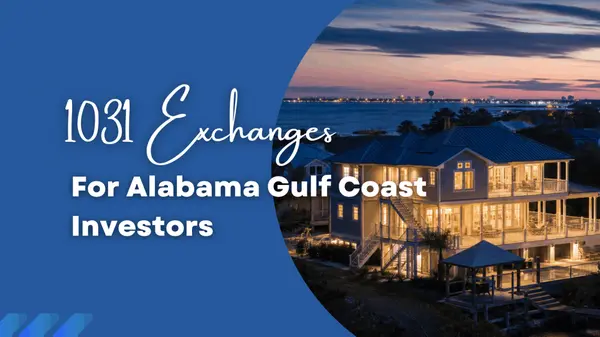
What is a 1031 exchange and how does it work for Gulf Coast investors?
A 1031 exchange, named for Section 1031 of the Internal Revenue Code, lets you sell an investment or business-use property and defer federal capital gains taxes by rolling the proceeds into a like-kind replacement property. On the Alabama Gulf Coast, where waterfront condos, vacation rentals, and beachside investment properties have appreciated significantly, that deferred tax bill can represent a substantial amount of money worth protecting.
The Core Rules You Cannot Afford to Miss
The IRS sets hard deadlines that don't bend for weekends, holidays, or slow closings. Here's what controls your timeline:
The 45-Day Identification Window
From the day you close on your relinquished property, you have exactly 45 days to formally identify potential replacement properties in writing. According to IRS Publication 544, the identification must be unambiguous, a legal description, street address, or distinguishable name. Most investors identify up to three properties (the "three-property rule") to give themselves options.
In a market like Gulf Shores and Orange Beach, where desirable beachfront inventory moves fast, I always tell my investor clients to start scoping replacement properties before they even list the relinquished one. Waiting until after closing to start your search is how people miss the window.
The 180-Day Exchange Period
You must close on the replacement property within 180 days of selling the relinquished one, or by the due date of your federal tax return for that year, whichever comes first. That second deadline catches people off guard. If you sell late in the tax year, filing an extension with the IRS can protect the full 180 days. Confirm this with your tax advisor before you assume you have the full window.
The Qualified Intermediary Requirement
You cannot touch the sale proceeds yourself. The funds must flow through a qualified intermediary (QI), an independent third party who holds the money between the sale and the purchase. Using the wrong party (your attorney, your agent, or anyone who has been your agent or employee in the past two years) disqualifies the exchange. The IRS like-kind exchange guidance is explicit on this. Vet your QI carefully, there is no federal licensing requirement for QIs, so experience and financial controls matter.
Like-Kind Property on the Gulf Coast
"Like-kind" is broader than most people think. You can exchange a Gulf Shores beachfront condo for an Orange Beach single-family rental, a Fort Morgan lot for a Perdido Key duplex, or even an Alabama investment property for a qualifying Florida property in Pensacola Beach. The key requirement is that both properties must be held for investment or productive use in a trade or business, not as a primary residence or a property you intend to flip immediately. The Treasury's final regulations on Section 1031 clarified the definition of real property following the 2017 Tax Cuts and Jobs Act, which limited 1031 exchanges to real property only.
Gulf Coast Market Context for 1031 Investors
The Alabama Gulf Coast has been a compelling 1031 destination for investors looking to upgrade or diversify their holdings. Baldwin County has seen sustained demand for short-term rental properties, driven by Gulf Shores and Orange Beach's position as one of the Southeast's top beach destinations. The combination of strong rental income potential and long-term appreciation has made this market attractive both as a relinquished-property origin and a replacement-property target.
When I work with investors executing a 1031 here, the most common scenario I see is someone selling a smaller Gulf Shores condo and exchanging into a larger beachfront property or a multi-unit rental. The math often works well: deferred taxes effectively become an interest-free loan from the government that stays invested in the new property.
| 1031 Exchange Step | Deadline / Requirement | Key Risk to Watch |
|---|---|---|
| Engage Qualified Intermediary | Before closing on relinquished property | Cannot be your attorney or agent of last 2 years |
| Close on Relinquished Property | Day 0, starts both clocks | Proceeds must go directly to QI, not to you |
| Identify Replacement Property | Day 45 (hard deadline) | Must be in writing; late identification voids exchange |
| Close on Replacement Property | Day 180 or tax return due date (earlier applies) | Filing extension may be needed to protect full 180 days |
| Report Exchange to IRS | With federal tax return for exchange year | File IRS Form 8824, required even if no tax is due |
Boot: The Partial Tax You Want to Avoid
"Boot" is any value you receive from the exchange that isn't like-kind property, cash back, debt relief not offset by new debt, or personal property. Boot is taxable in the year of the exchange. To fully defer taxes, the replacement property's value must equal or exceed the relinquished property's value, and any mortgage on the new property must equal or exceed the mortgage paid off on the old one. Your QI and tax advisor should model this for you before you commit to a replacement property.
Depreciation Recapture Still Applies
A 1031 exchange defers capital gains tax, but it carries forward your depreciation basis. When you eventually sell without exchanging, the IRS will recapture depreciation at up to 25% under current law. Many investors address this by continuing to exchange throughout their lifetime, then passing the property to heirs who receive a stepped-up basis under current estate tax rules. This is a planning conversation for your CPA or tax attorney, not something to decide based on a blog post.
Alabama and Florida Closing Considerations
Both Alabama and Florida are "dry closing" states in practice, meaning funds are disbursed after all documents are signed and recorded. Alabama does not have a state income tax on capital gains for individuals (Alabama taxes capital gains as ordinary income under the Alabama Department of Revenue's individual income tax rules), which makes the federal deferral even more impactful for in-state investors. Florida has no state income tax at all, which benefits investors exchanging into Pensacola Beach or Perdido Key properties. Confirm your specific state tax exposure with a licensed CPA familiar with both jurisdictions.
Recording fees and closing costs in Alabama are governed by county-level practices. Baldwin County closings typically involve an attorney or title company handling the settlement. The Baldwin County Probate Court handles deed recording. Your QI, title company, and closing attorney need to coordinate closely to ensure exchange funds are handled correctly, a misstep at the closing table can disqualify the exchange.
If you're buying in a vacation-rental-heavy area like Gulf Shores or Orange Beach, also check whether the property falls under any short-term rental licensing requirements through the City of Gulf Shores or City of Orange Beach. Rental income history and licensing status affect the property's investment profile and your exchange qualification if the IRS ever scrutinizes the "held for investment" intent.
For investors considering Florida properties as replacement assets, the Florida Department of Revenue is the authoritative source on any applicable state-level tax treatment. And for properties in Escambia County (Pensacola Beach), deed recording runs through the Escambia County Clerk of Court.
The only way to know whether a specific Gulf Coast property works for your exchange, on price, timeline, and investment intent, is to run the numbers with your tax advisor and work with an agent who knows which properties here actually perform as rentals. That's exactly the kind of analysis I walk my clients through before we ever make an offer.
If you're weighing a vacation rental purchase as a replacement property, my post on buying a vacation home in Gulf Shores covers the local considerations you'll want to think through alongside your 1031 planning.
Frequently Asked Questions
Can I use a 1031 exchange to buy a vacation home in Gulf Shores for personal use?
Not directly. The replacement property must be held for investment or business use, not personal enjoyment. However, the IRS has provided guidance (Revenue Procedure 2008-16) that allows a vacation property to qualify if you limit personal use and rent it out at fair market value for a sufficient period after the exchange. This is a nuanced area, your CPA needs to structure the usage rules carefully before you close on the replacement property.
What happens if I can't find a replacement property within 45 days?
The exchange fails, and the sale proceeds become taxable in the year of the sale. There are no extensions for the 45-day identification deadline under normal circumstances. This is why I strongly encourage investors to identify potential replacement properties on the Gulf Coast before they even list the relinquished property, having a shortlist ready before Day 1 is the best insurance against missing the window.
Do I need a separate qualified intermediary for Alabama and Florida properties?
No. A single qualified intermediary can handle an exchange that crosses state lines. What matters is that the QI is independent, experienced, and has proper escrow controls in place. Since both Alabama and Florida closings involve attorneys or title companies, your QI should coordinate directly with the closing agent in each state to ensure funds are handled correctly on both ends.
Can I exchange a Gulf Shores condo for a Pensacola Beach condo?
Yes, as long as both properties qualify as investment or business-use real property. Exchanging across state lines is permitted under federal law, the like-kind requirement applies to the nature of the asset (real property for real property), not its location within the United States. Both Alabama and Florida have favorable state tax environments for this kind of exchange, which makes cross-state Gulf Coast exchanges particularly attractive.
What is a reverse 1031 exchange and does it work on the Gulf Coast?
A reverse exchange lets you acquire the replacement property before selling the relinquished one, useful when you find the right Gulf Shores or Orange Beach property and don't want to lose it while waiting to sell. The IRS allows this structure under Revenue Procedure 2000-37, but it requires an "exchange accommodation titleholder" to hold title to one of the properties, and the same 45/180-day deadlines apply in reverse. Reverse exchanges are more complex and more expensive to execute, but they're a legitimate tool when timing doesn't cooperate. Talk to a QI and your tax advisor before pursuing one.
The bottom line: a 1031 exchange is one of the most powerful wealth-building tools available to real estate investors, and the Alabama Gulf Coast is a market where it can make a meaningful difference in your long-term returns. Getting the details right, the intermediary, the timeline, the replacement property selection, is where working with someone who knows this market pays off.
I'm happy to walk you through the investment property landscape in Gulf Shores, Orange Beach, Fort Morgan, and Perdido Key, and connect you with the right professionals to structure your exchange correctly. Call me at 251.233.9300 or search available investment properties to start the conversation.
Equal Housing Opportunity. Kristie Wheeles, License #95962-2 | Wheeles Realty, regulated by the Alabama Real Estate Commission. This article is general information only and is not legal, tax, or financial advice. 1031 exchange rules are complex and fact-specific, confirm your own situation with a licensed CPA, tax attorney, qualified intermediary, and/or closing attorney before proceeding.
Categories
Recent Posts